Andre Sevrugin
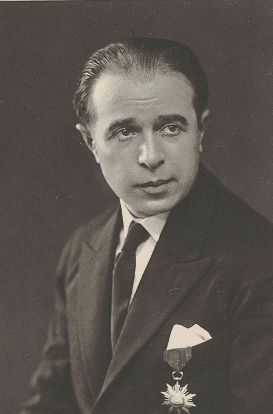
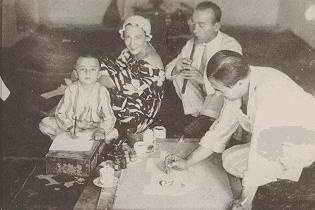
The famous painter and miniaturist André Sevrugian was born on May 1, 1894 in Tehran, to Antoine Sevruguin, the royal photographer of Nasser ed-Din Shah of Persia, as the fifth of seven children. The family's previous surname, Sevruguin, was taken by André's grandfather Vasily Sevruguin when he took up his post at the Russian Embassy in Tehran. Later, André re-Armenianized it by adding the "yan" particle.
André received his primary and secondary education at the Saint Louis French School in Tehran. He began painting at an early age. He was not yet 15 years old when his first works - watercolours, landscapes, symbolic works - began to attract the attention of European artists and travellers.
In 1912, André left for Europe to pursue higher education. He was accepted to the Paris Academy of Fine Arts, but the outbreak of World War I thwarted all plans, and he, like many others, enlisted in the French Foreign Legion. André was wounded in the war. His parents eventually found him through the Red Cross and took him to Tehran. In 1915, the events in Western Armenia prompted him to join the Armenian volunteer groups of the Russian army. As is known, although Persia had taken a neutral position during World War I, the Russian and Turkish armies invaded Northern Persia and Kurdistan. There were also Cossacks in the Russian army under the command of General Bicherakhov. Since André not only spoke Persian, but was also well acquainted with the country, he was accepted into the Cossack unit.
After the end of World War I, André remained in Tehran, where he married Manya Jagharbegian. For some time he had to teach painting in schools, but for him the most important thing was to create, so he soon left teaching.
After Persia, Sevrugian, who settled in Germany, made a sharp turn in his creative life from Persian miniature painting to Armenian themes. He created series of paintings with historical, religious, and ethnographic motifs.
The artist's innovative thinking is primarily manifested within the framework of the themes of Ferdowsi’s poems, thus, perhaps, in his own way, fulfilling his childhood dream of becoming Rostam. With the inspiration and soulful enthusiasm of a true darvish, he led a secluded life for nine whole years with his wife and only son, Emanuel. So as a result of his multifaceted talent and creative imagination, 416 paintings on the themes of the great Persian poet Ferdowsi’s "Shahnameh" were created.
In 1933-1934, when the whole world was preparing to celebrate the millennium of the famous Ferdowsi, when the heart of every Iranian was beating with a sense of pride, the exhibition of André Sevrugian's "Shahnameh" paintings pleasantly coincided with those great festivities. The opening of the exhibition took place on April 28, 1934, in the exhibition hall of the Pedagogical Institute in Tehran, and the artist was awarded the Order of Arts and Sciences. Immediately after the "Shahnameh" exhibition, numerous articles were published in both Iranian and Armenian newspapers about the still unknown artist. Sevrugian's work was highly appreciated, and the Iranian government awarded him a medal of a second degree, which brought the artist even greater recognition. This exhibition also provided an opportunity for André Sevrugian to meet the famous Persian prose writer Sadegh-e Hedayat. Warm friendly relations were established between the artists, which soon bore wonderful fruits. The two published a book dedicated to Khayyam. The author of the book was Hedayat, and the illustrations were done by Sevrugian. Later, they founded a philosophical group with Bozorg-e Alavi and other intellectuals. Here the artist received the nickname Darvish, which accompanied him throughout his life. This name was given to him on the one hand for his keen interest in Sufism and Islamic mysticism, and on the other hand for his ascetic lifestyle.
In 1935, Sevrugian took his paintings to India. Solo exhibitions were organised in Calcutta, Bombay, and Hyderabad. After that, Dervish devoted himself to illustrating the quatrains of the famous Persian poet and philosopher Omar Khayyam (1048-1131). During these years, the artist seemed to be preparing for a new feat, and as expected, he approached the poetry of the greatest master of Persian poetry of all time, Hafez (1326-1390), creating about 180 magnificent miniatures in these topics. André Sevrugian has a unique style, loves to create freely with different materials and techniques, including watercolour, gouache, acrylic, and oil paint. His works, especially landscapes, were mainly created during his travels around the Orient. The paintings belonging to this genre of the later period were created largely from memory or are canvases full of symbolism. This applies especially to the seascapes (numbering 350), although some paintings can be identified, such as images of Lake Sevan, the Black and Caspian Seas. Often such paintings reflect the perception of natural phenomena, but are more an allegory of creative loneliness and failures. The image of a naked woman was a surprise, for example. In 1936, the artist left for Europe, settled in Vienna and performed in a number of exhibitions, receiving respect and high praise everywhere. In Vienna, André created a new series of paintings for an exhibition in the United States. However, after air raids on the city during the Second World War, the artist's house and studio, along with the paintings, were burned to the ground. Fearing political persecution, André decided to leave Vienna. He leaves the city with his wife Manya and son Emmanuel, taking with him two preserved illustrated pages of the Shahnameh and three suitcases. The family travels to Germany, first to Ravensbrück, then to Stuttgart. Shortly after settling in Stuttgart, Manya tries to return Sevrugian's paintings that were not sold during exhibitions in India and London. As a result of the efforts made in this direction, only a part of the paintings was returned, although the paintings were Andre's property. Later, the unreturned paintings were put up for sale on the art market, and to this day, individual works from these collections do come up. In 1948, Sevrugian participated in the international exhibition opened in Stuttgart with a painting inspired by the poetry of Omar Khayyam and received an honorary award. The artist's solo exhibitions were a great success in a number of cities in Persia, including Tehran (1958, 1961), Abadan and Mesjed-e Suleiman (1961). The next solo exhibition took place in Heidelberg in 1976, where he exhibited his best works of different years.
Armenian themes also occupy a special place in Sevrugian's works. The artist was closely connected with the Armenian people and their historical past. Living images taken from ancient Armenian folklore, literature and Armenian history were embodied in his art. This series includes "Artashes and Satenik", "Grigor Lusavorich", "The Death of Shamiram Kokhba Ara", "Vardanank", "The Forty Days of Musa Dagh", "Sardarapat", "The Death of Zoravar Andranik", etc. Among André Sevrugian's works, batik works made in mixed media on canvas stand out favourably. The series of paintings dedicated to Sayat-Nova, which is made in this technique, is of serious artistic value, from which oriental splendour and elegance emanate. In these paintings, the artist masterfully expressed the incidents and experiences described in Sayat-Nova's songs and the poet's love and suffering that reach the level of cult. In 1988 and then in 1996-1997, an exhibition dedicated to André Sevrugian's art was opened in New York on the initiative of artist Markos Grigoryan. In February 2002, under the auspices of the Tehran "Cultural Heritage" organisation and on the initiative of Yvette Tajarian, an exhibition of Darvish's paintings was opened in the Tehran "Golestan" Palace-Museum. Forty years had passed since the last exhibition organised in Tehran, but this time the artist's paintings caused a real sensation in the city. In 2008-2009 in the German cities of Frankfurt and Mainz, the works of the father and son Sevrugians were presented. Later, in 2015, the artist's son, Emanuel Sevrugian, donated a large number of his father's works to Matenadaran, as a result of which a solo exhibition was opened in the same year. Later, works were donated to the museums of the Mother See of Holy Etchmiadzin and the History Museum of Yerevan.
Sevrugian belongs to the group of 20th-century painters who brought innovation to Persian fine art. The themes of his paintings are mainly taken from the poetic works of Ferdowsi, Khayyam, Hafez, Baba Taher, in which universal and human ideas were expressed. He left behind a great historical legacy of paintings and miniatures depicting Persian literature and culture. His works are a unique fusion of Oriental and Western art. Sevrugian was one of the few intellectuals who played a bridge between the two periods of Persian culture in the first quarter of the 20th century. Appearing at a new stage in Iranian history, he tried to bring about a change in Persian art, which had been stagnant since the 19th century.
In 1936, the artist left for Europe, settled in Vienna and performed in a number of exhibitions, receiving respect and high praise everywhere. In Vienna, André created a new series of paintings for an exhibition in the United States. However, after air raids on the city during the Second World War, the artist's house and studio, along with the paintings, were burned to the ground. Fearing political persecution, André decided to leave Vienna. He leaves the city with his wife Manya and son Emmanuel, taking with him two preserved illustrated pages of the Shahnameh and three suitcases. The family travels to Germany, first to Ravensbrück, then to Stuttgart. Shortly after settling in Stuttgart, Manya tries to return Sevrugian's paintings that were not sold during exhibitions in India and London. As a result of the efforts made in this direction, only a part of the paintings was returned, although the paintings were Andre's property. Later, the unreturned paintings were put up for sale on the art market, and to this day, individual works from these collections do come up. In 1948, Sevrugian participated in the international exhibition opened in Stuttgart with a painting inspired by the poetry of Omar Khayyam and received an honorary award. The artist's solo exhibitions were a great success in a number of cities in Persia, including Tehran (1958, 1961), Abadan and Mesjed-e Suleiman (1961). The next solo exhibition took place in Heidelberg in 1976, where he exhibited his best works of different years.
Armenian themes also occupy a special place in Sevrugian's works. The artist was closely connected with the Armenian people and their historical past. Living images taken from ancient Armenian folklore, literature and Armenian history were embodied in his art. This series includes "Artashes and Satenik", "Grigor Lusavorich", "The Death of Shamiram Kokhba Ara", "Vardanank", "The Forty Days of Musa Dagh", "Sardarapat", "The Death of Zoravar Andranik", etc. Among André Sevrugian's works, batik works made in mixed media on canvas stand out favourably. The series of paintings dedicated to Sayat-Nova, which is made in this technique, is of serious artistic value, from which oriental splendour and elegance emanate. In these paintings, the artist masterfully expressed the incidents and experiences described in Sayat-Nova's songs and the poet's love and suffering that reach the level of cult. In 1988 and then in 1996-1997, an exhibition dedicated to André Sevrugian's art was opened in New York on the initiative of artist Markos Grigoryan. In February 2002, under the auspices of the Tehran "Cultural Heritage" organisation and on the initiative of Yvette Tajarian, an exhibition of Darvish's paintings was opened in the Tehran "Golestan" Palace-Museum. Forty years had passed since the last exhibition organised in Tehran, but this time the artist's paintings caused a real sensation in the city. In 2008-2009 in the German cities of Frankfurt and Mainz, the works of the father and son Sevrugians were presented. Later, in 2015, the artist's son, Emanuel Sevrugian, donated a large number of his father's works to Matenadaran, as a result of which a solo exhibition was opened in the same year. Later, works were donated to the museums of the Mother See of Holy Etchmiadzin and the History Museum of Yerevan.
Sevrugian belongs to the group of 20th-century painters who brought innovation to Persian fine art. The themes of his paintings are mainly taken from the poetic works of Ferdowsi, Khayyam, Hafez, Baba Taher, in which universal and human ideas were expressed. He left behind a great historical legacy of paintings and miniatures depicting Persian literature and culture. His works are a unique fusion of Oriental and Western art. Sevrugian was one of the few intellectuals who played a bridge between the two periods of Persian culture in the first quarter of the 20th century. Appearing at a new stage in Iranian history, he tried to bring about a change in Persian art, which had been stagnant since the 19th century.
The artist died on December 17, 1996 in Stuttgart and was buried in the Bergfriedhof cemetery in Heidelberg next to his wife, Manya.